From RM5 to RM45: The Real Reason Some Hot Sauces Cost Nine Times More Than Others
Lingham’s Chili Sauce costs about RM6 for a 340g bottle. Tabasco Original costs about RM20 for 148ml. A jar of artisanal chili crisp from a specialty producer can run RM45 or more. These are all hot sauces, or something close to it. The price gap between the cheapest and most expensive is roughly nine times. What exactly are you paying for?
The easy answer is branding. And branding is part of it – a global name, a century of heritage, a distinctive bottle shape – those things add cost. But the price gap is not just a branding tax. It is a bill for real, physical differences in how the sauce is made.
Tier 1: The Mass Market (RM4-8 for 300g+)
This is the territory of Lingham’s, Life, Maggi chili sauce, and supermarket house brands. These sauces are produced at enormous scale – millions of bottles per year. The ingredients list typically leads with water or sugar, followed by chili paste, thickeners (modified starch), preservatives, and flavour enhancers. The production model is industrial: continuous mixing, high-speed bottling lines, distribution through every grocery chain in the country.
What you are paying for: reliability. These sauces taste exactly the same every time. They are always on the shelf. They are cheap enough that you never think about the price. What you are not paying for: distinctive ingredients, small-batch attention, or any kind of origin story. The bottle tells you nothing about where the chilies came from or who made the sauce. It is a commodity product.
Tier 2: The Branded Import (RM15-25 for 100-150ml)
This is Tabasco, Sriracha (Huy Fong), Nando’s Peri-Peri, and similar globally recognised names. These are not mass-market commodities, but they are not artisanal either. They sit in a middle space: recognisable brands with specific recipes and production methods that distinguish them from generic alternatives.
Tabasco famously ages its pepper mash for three years in oak barrels before blending. Huy Fong Sriracha uses sun-ripened red jalapeños and a specific grinding process that gives the sauce its signature texture. Nando’s sources African bird’s eye chili for its peri-peri base.
What you are paying for: a specific, replicable flavour profile backed by real production standards. The ingredient lists are shorter than Tier 1 (Tabasco has three: peppers, vinegar, salt). The bottles tell a story – even if it is a familiar one – and the quality is consistent globally. You pay roughly RM20 for 150ml, or about RM0.13 per ml.
Tier 3: The Artisan / Small-Batch (RM25-45 for 100-200ml)
This is where craft meets commerce. Artisan hot sauces are made in batches of hundreds or thousands, not millions. They use specific ingredients sourced from named places – not just “chili,” but a particular variety from a particular farm. They often have certifications (organic, halal, non-GMO) that add cost at every step of the supply chain. And they package in smaller volumes because they are not competing on price-per-gram.
These sauces cost more to make per bottle – sometimes dramatically more – because they do not enjoy the economies of scale that Tier 1 and 2 producers do. A small-batch producer ordering 1,000 glass bottles pays more per unit than a multinational ordering a million. A small producer working with a single nutmeg farm in Balik Pulau pays a premium that a bulk spice importer does not.
What you are paying for: transparency. You know where the ingredients came from. You know the production volume. You can often trace the bottle back to a specific kitchen or facility. The price premium is not a branding tax – it is the real cost of making something in small quantities with traceable ingredients.
Where Tanjong Sauce® Lands
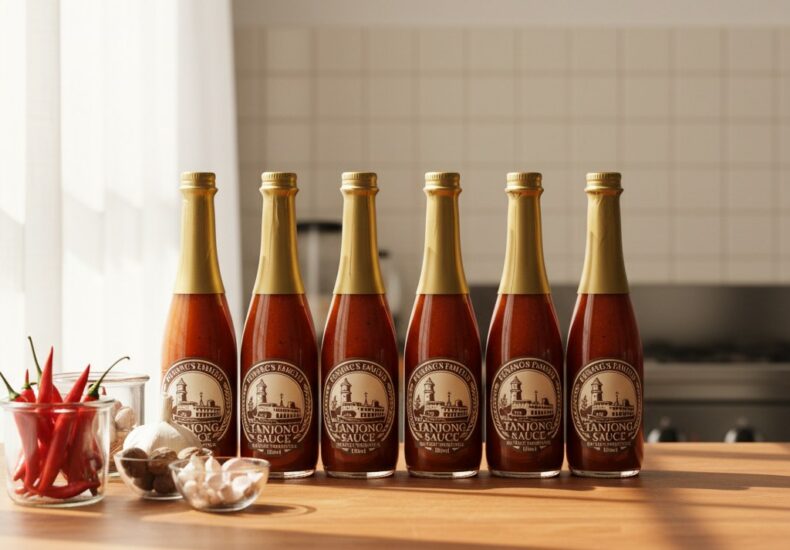
Tanjong Sauce® sits at the accessible edge of Tier 3. It is not RM45 – at RM12 for a 100ml bottle, it is positioned closer to Tier 2 pricing but built to Tier 3 standards: small-batch production in Simpang Ampat, Penang. Eight ingredients, all identifiable by name. No thickeners, no preservatives, no flavour enhancers. JAKIM halal-certified. MeSTI food safety certified.
The nutmeg is the main cost differentiator. Nutmeg powder costs significantly more per gram than chili or garlic powder. A sauce built around nutmeg as its signature note – rather than as a trace background spice – carries that ingredient cost through to the final price. You are not paying for a brand story. You are paying for the nutmeg.
How to Read a Price Tag
The next time you see a hot sauce on a shelf or in an online cart, do not just compare the sticker price. Look at the ingredient list. Count the ingredients. Check for thickeners, preservatives, and flavour enhancers – those are the hallmarks of a sauce built to a price point, not to a recipe. Check whether the bottle tells you where anything came from. And then ask yourself: am I buying a condiment, or am I buying eight actual ingredients?
The answer usually matches the price. And now you know why.
Get Your Three Drops
Tanjong Sauce® – World’s First Halal Nutmeg Hot Sauce. Small-batch. Eight real ingredients. RM12. Made in Penang.
You may also like
Leave a Reply