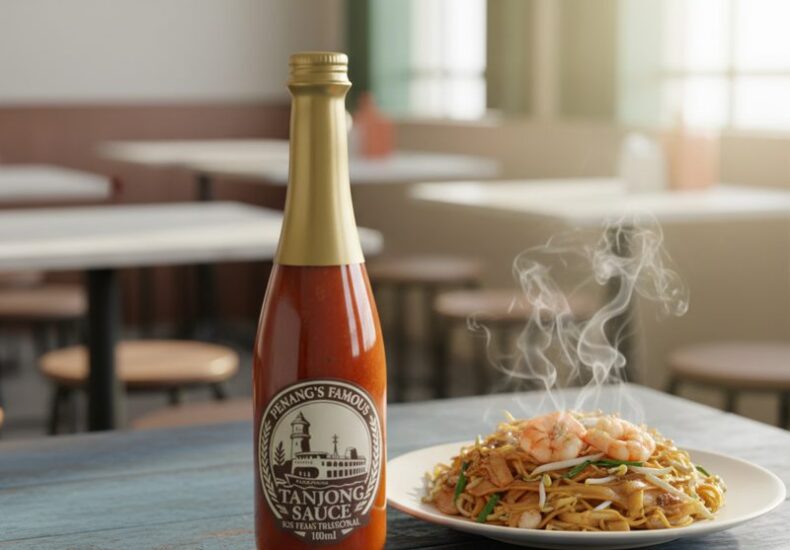
Char Kway Teow at Home: The Wok Hei Shortcut That Actually Works
Char kway teow is the dish that decides whether a cook can handle a wok. In Penang it is judged on two things: how much smoke you can taste, and whether the noodles arrive dry instead of swimming in sauce. Home kitchens fail on both, usually for the same reason. We crowd the pan, we keep the noodles wet, and we add the sauce far too early.
The good news is that none of this needs a commercial burner to fix. It needs sequencing.
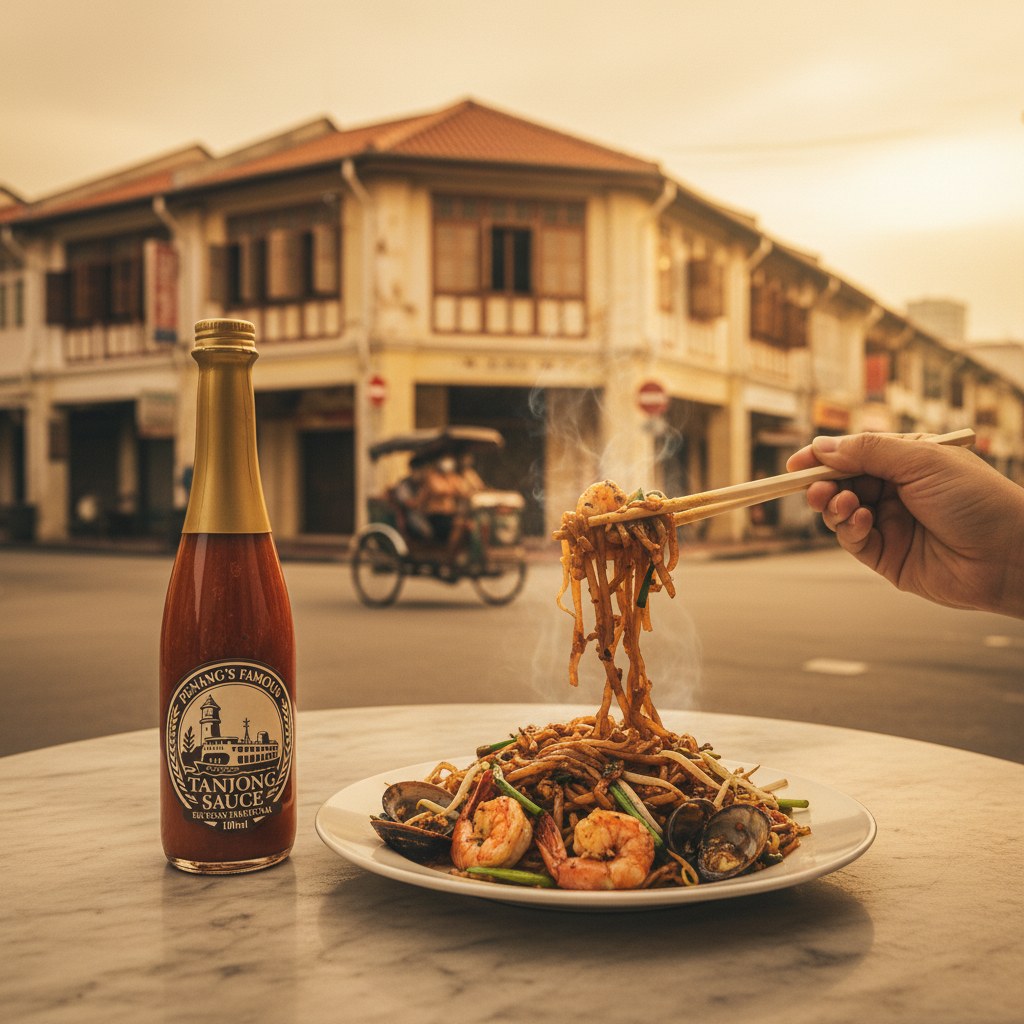
The Pan Has to Be Furious
Wok hei is not something you can buy in a bottle. It is the taste of serious heat meeting dry noodles for a short time: a faint char, a sweetness at the edges, a smell that fills the whole kitchen. To get even a hint of it at home, three conditions have to line up at once.
First, the pan must be preheated until a drop of water evaporates on contact. Second, the noodles must be drained and left to dry rather than dripping wet. Third, the batch has to be small. Two portions maximum. A crowded pan steams instead of searing, and steamed noodles are the reason most home versions taste like noodles with sauce rather than char kway teow.
The Order of Things
Aroma first: garlic, and if you have them, a little Chinese sausage or a few prawns. Then the noodles, pressed flat against the pan and left alone long enough to pick up colour. Only then the egg and the greens, moved fast so they stay bright. Sauce goes in last, off the direct heat, tossed twice and plated.
That last part is the difference between a plate of food and a plate of sauce. Noodles cooked in sauce keep absorbing it and turn soft. Noodles finished with sauce keep their bite.
The Vinegar Question
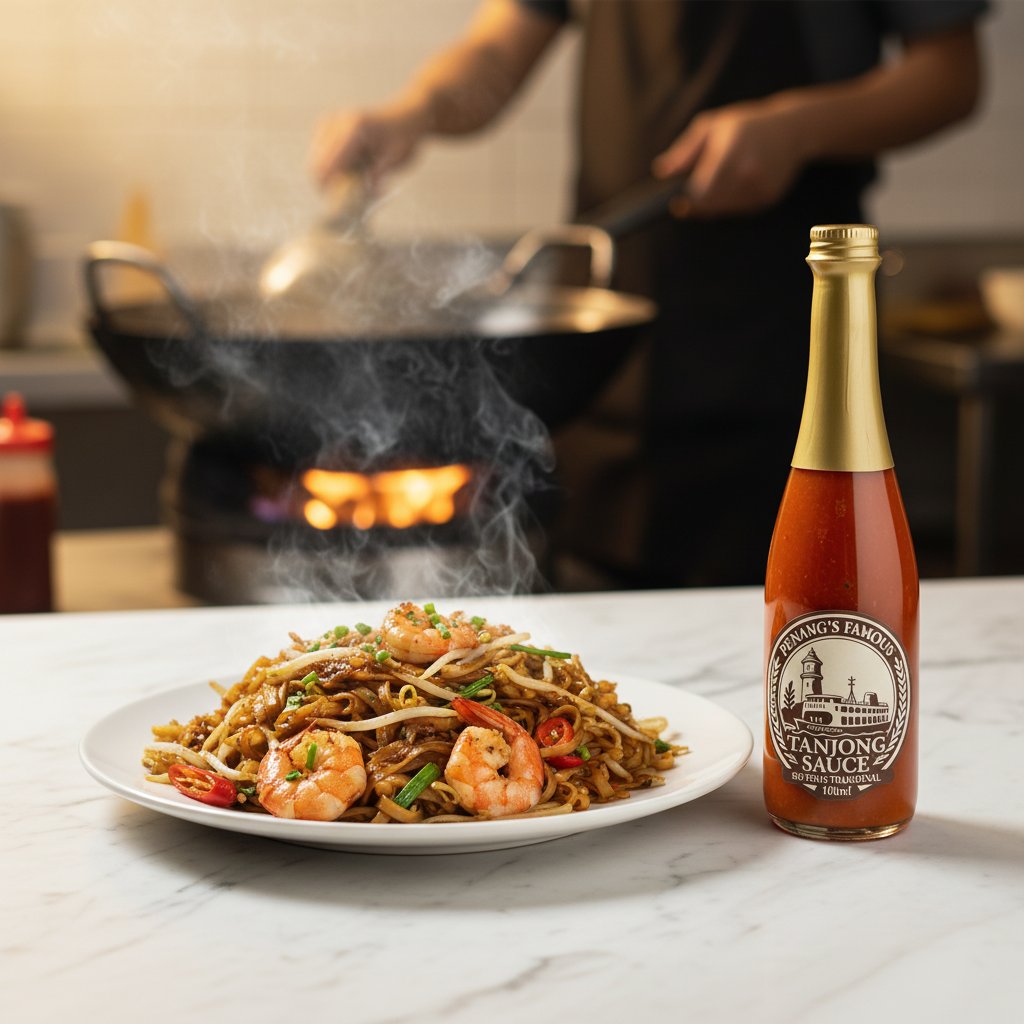
This is where a thin, vinegar-based sauce earns its place next to a wok. Char kway teow is oily by design: the noodles, the egg, the fat from whatever meat you used. What it needs at the end is acid, not more weight. A vinegary sauce cuts through that oil in a way a thick, sweet sambal never will. It also keeps the plate lighter, which is why you can finish a whole portion and still want to keep eating.
Tanjong Sauce® works for exactly this reason. Vinegar leads, chili follows, and a warm nutmeg note sits underneath everything. Pour a little over the noodles, toss twice, and the plate tastes finished rather than dressed.
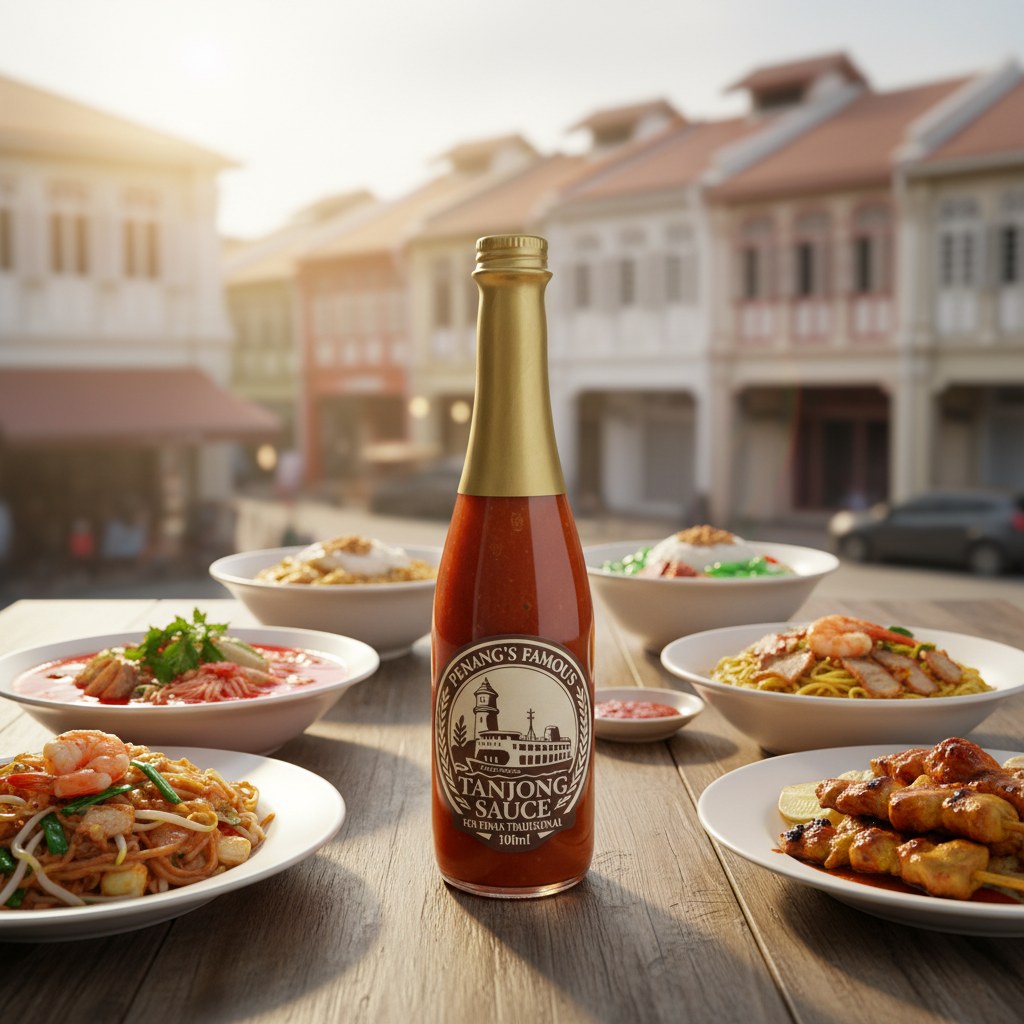
A Weeknight Version That Fits
Flat rice noodles, dried overnight in the fridge if you remember. Two prawns, one egg, a handful of chives. Pan screaming hot, one tablespoon of oil, noodles in for ninety seconds without touching them. Egg in, broken up, greens in, off the heat, then the sauce. If you want more heat, add sliced chili at the start so it cooks into the oil.
It will not be Penang. It will be close enough that you stop ordering in.
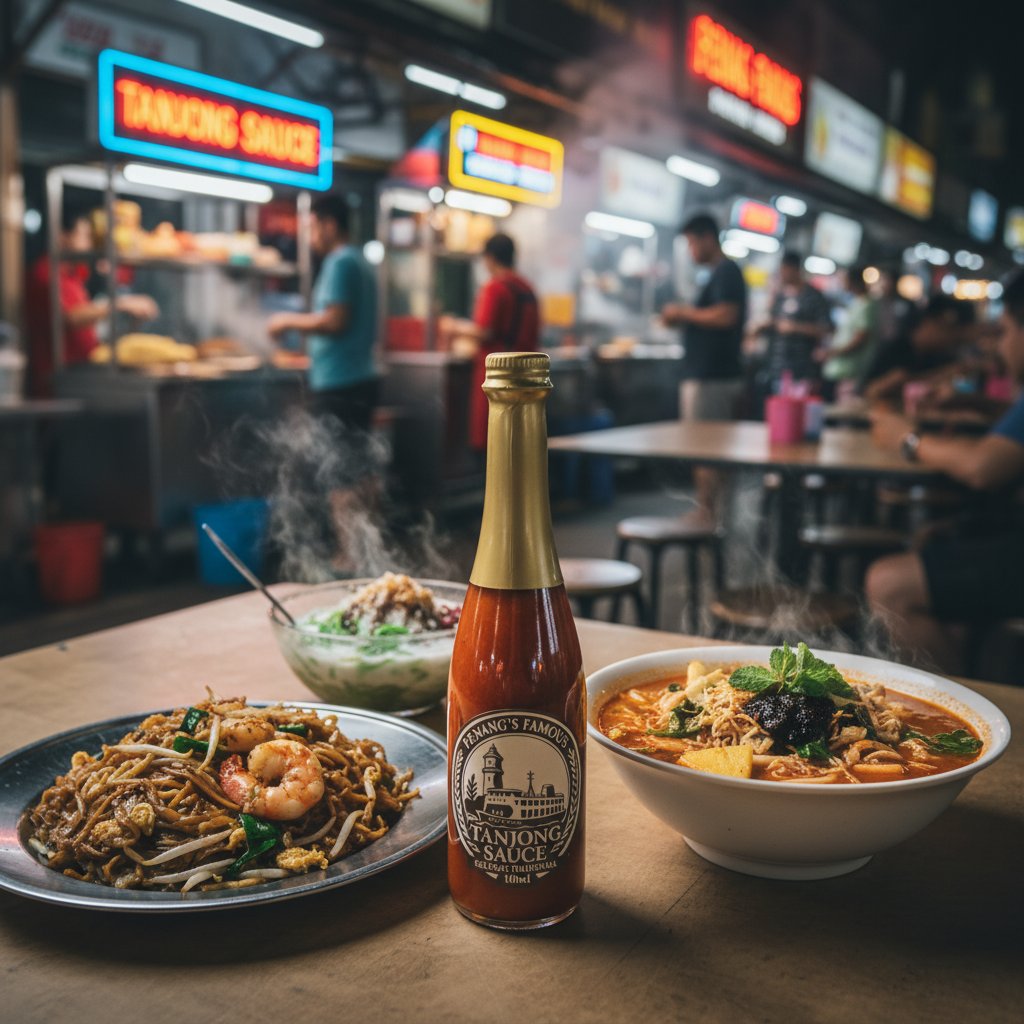
One Bottle, One Wok
Char kway teow is a good test of any sauce, because the noodles take on whatever you finish them with. If a sauce makes them heavy, it is doing too much. If it makes them sharper and lighter, keep it within arm’s reach of the stove.
Where to Buy Tanjong Sauce®
Ready to bring the authentic Penang taste to your kitchen? Order Tanjong Sauce® now:
- Shopee – Fast delivery across Malaysia
- Lazada – Available with free shipping options
- TikTok Shop – Order directly in-app
- tanjongsauce.com – Order direct from our website
100ml travel friendly bottle. Halal certified. Small batch. Malaysian made. Taste the difference today.
You may also like


Leave a Reply