To Age or Not to Age: Why Some Hot Sauces Sit in Barrels and Others Go Straight to the Bottle
There is a quiet assumption in the world of artisanal food that older equals better. Aged cheese. Barrel-aged whiskey. Naturally fermented soy sauce that has been sitting in clay pots for three years. The message is consistent: time equals quality. Patience equals depth.
Hot sauce is not immune to this assumption. Walk through any specialty food market and you will see bottles proudly labelled “barrel-aged,” “3-year fermented,” “small-batch aged.” The implication is clear: the longer it sat, the better it must be.
But here is the thing about fermentation in hot sauce: it is a choice, not a grade. And for some sauces, skipping the barrel is not a shortcut. It is the point.
What Fermentation Actually Does
When chili peppers are fermented, naturally occurring bacteria (lactobacillus) convert the sugars in the peppers into lactic acid. This does three things: it creates tangy, complex flavour compounds; it preserves the sauce naturally; and it alters the texture, often making the sauce thicker and more pulpy.
Tabasco is the most famous example of this approach. Whole tabasco peppers are mashed with salt and aged in white oak barrels for up to three years. The resulting mash is then blended with distilled vinegar. The barrel time is real, and it produces a distinct flavour profile – funky, deep, with the kind of complexity that only time can build.
But fermentation also does something else: it changes the ingredients. The fresh character of the chili is replaced by fermented notes. The brightness of raw garlic mellows into something earthier. The sauce gains depth but loses immediacy. Whether this is an improvement depends entirely on what you want the sauce to do.
The Case for Fresh Blending
Not every sauce needs to taste like it has been sitting in a barrel. Some sauces are built around the idea of freshness – clean, immediate flavours that hit the palate directly, without the mediation of fermentation.
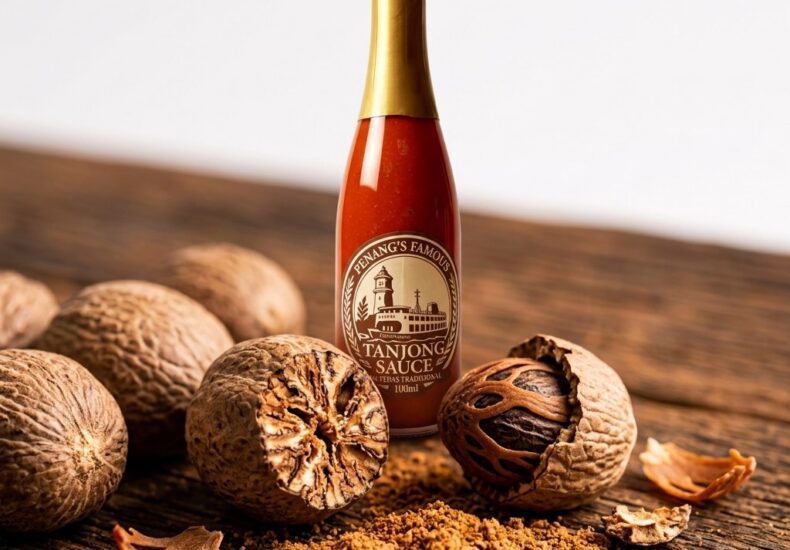
This is especially true for sauces where the ingredients themselves are the star. If you are working with a spice as distinctive as Penang nutmeg – warm, aromatic, peppery – fermentation can actually work against you. The lactic acid tang competes with the nutmeg’s natural sweetness. The funky depth buries the delicate aromatic notes that make nutmeg special in the first place.
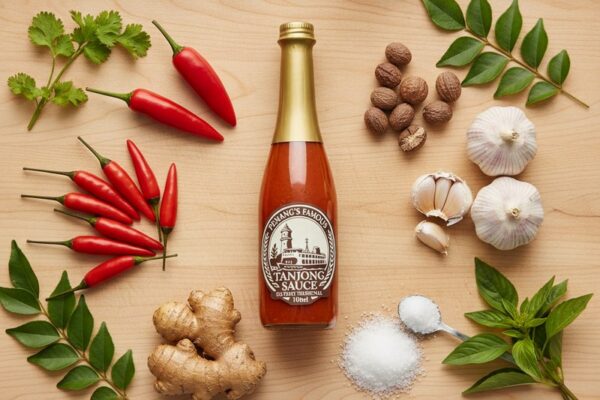
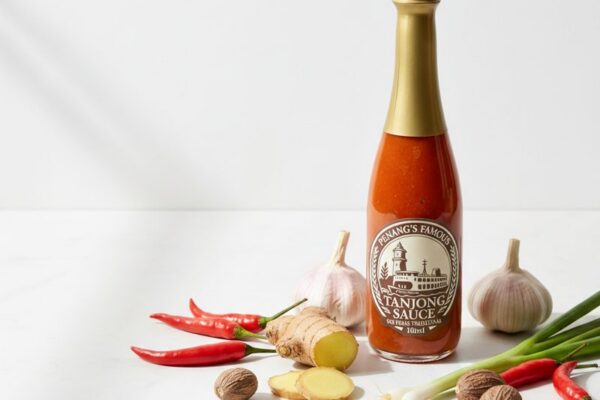
Tanjong Sauce® is fresh-blended. The eight ingredients – vinegar, chili powder, garlic powder, onion powder, ginger powder, nutmeg powder, sugar, and salt – are combined and bottled without a fermentation step. This is deliberate. The nutmeg note is preserved exactly as it is: bright, warm, instantly recognisable. The garlic and onion stay clean and direct rather than transforming into fermented relatives of themselves. The vinegar provides the acid structure without needing bacteria to produce it.
Think of it like this: fermented hot sauce is a slow-cooked rendang. Fresh-blended hot sauce is a quick sambal belacan pounded in a lesung five minutes before the meal. Both are valid. They serve different moments.
What “Clean Label” Actually Means
The term “clean label” gets thrown around a lot in food marketing, often without meaning much. But in the context of a fresh-blended sauce, it has a specific, verifiable meaning.
A fresh-blended sauce requires fewer inputs to achieve stability. There is no fermentation starter culture. No added preservatives to control the fermentation process. No extended aging that introduces risk of spoilage. The sauce is what it says on the label: eight ingredients, combined and bottled. That is it.
This is not to say fermented sauces are unhealthy or dangerous – they are not. Fermentation is one of the oldest and safest food preservation methods in human history. But a fresh-blended sauce offers something different: transparency. What you taste is exactly what went into the bottle, without the transformations of time and bacteria in between.
For consumers who care about reading labels and understanding what they are eating, that simplicity is its own kind of quality assurance.
Two Paths, One Goal
The next time you see a hot sauce that markets its age as a virtue, ask yourself: is the age serving the flavour, or is it just a story? A three-year-fermented sauce is not automatically better than a fresh-blended one. It is just different. It took a different path to reach your table.
And if you are looking for a sauce where you can taste the actual ingredients – the nutmeg, the garlic, the chili – without the filter of fermentation, you are not looking for a shortcut. You are looking for a deliberate choice.
Get Your Three Drops
Tanjong Sauce® – World’s First Halal Nutmeg Hot Sauce. Fresh-blended. Eight ingredients. No fermentation. No MSG. Made in Penang.
You may also like
Leave a Reply